459 | What Happens When You Build a Successful Business You No Longer Want to Run with Lisa Congdon
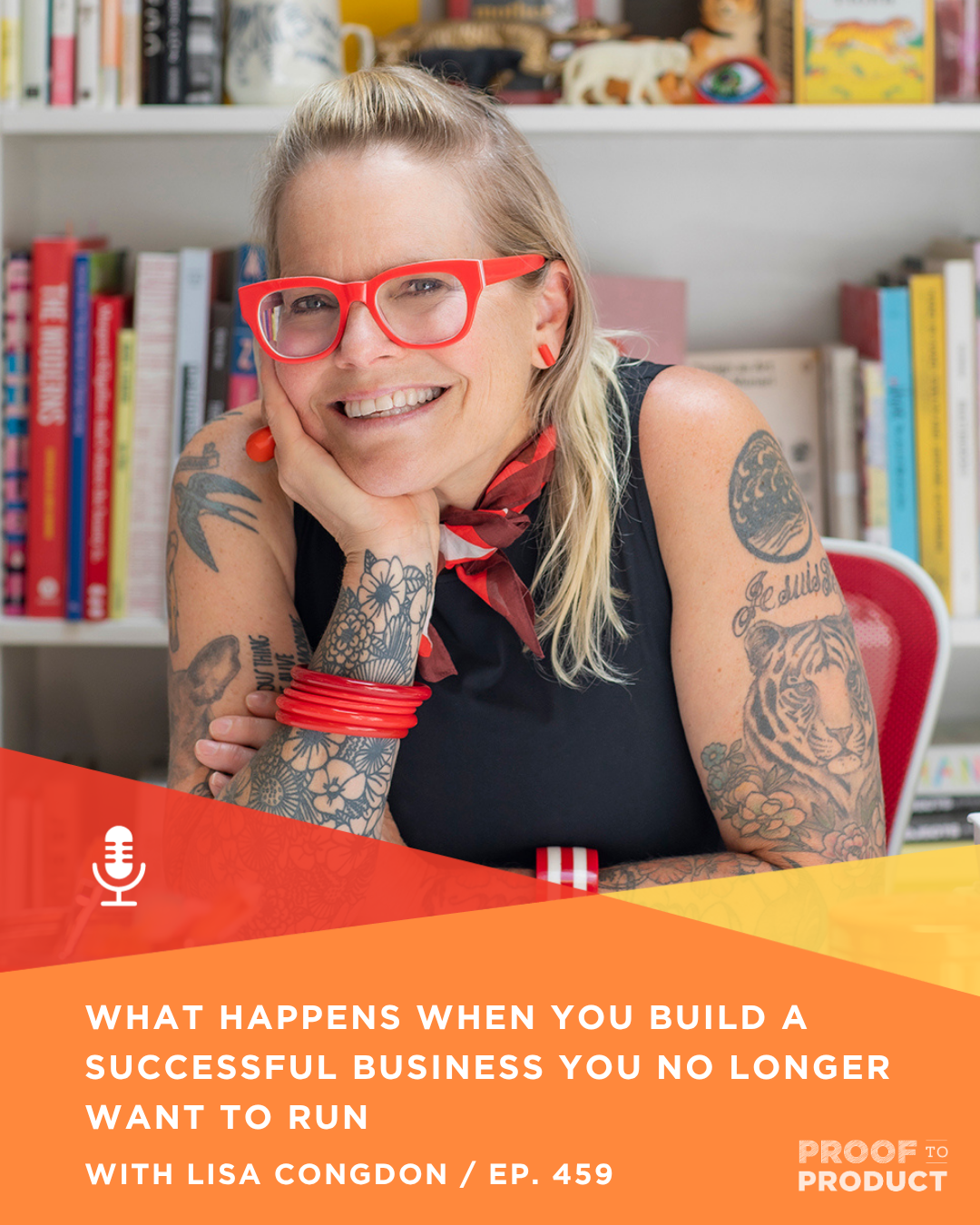
Today I'm talking with someone I've admired for a long time— artist, author, illustrator, and creative entrepreneur Lisa Congdon.
Lisa has been building businesses around her art for nearly 20 years, and in this conversation we talk about something that I think a lot of established brand owners will relate to, and that's what happens when you've built a successful business but you realize it's no longer the business you want to run.
Lisa recently made the decision to close her retail business after 20 years, not because it was failing, but because she wanted more time and space to make art and pursue the work that really energizes her.
I appreciate how intentional she was about that decision.
She didn't just burn everything down and hope for the best, like some of us feel like doing every day, but she looked at her finances and considered other revenue streams.
She created a plan and gave herself and her team a runway.
We also get into how Lisa developed a recognizable artistic point of view, why making work that actually means something to you can create a stronger connection with your customers, and the difference between trend-driven, trend-agnostic, and trend-informed.
There are so many good nuggets in this conversation about building a product brand that works commercially while still staying true to your creative voice and knowing when it's time to make a change.
Today’s episode is sponsored by our Retailer Roundtable interview series. To make a strong first impression with wholesale buyers, we need to do a few things really well:
We need to make it easy for stores to purchase from us
We need to have clear pricing and terms & conditions
We need to clearly communicate and build strong relationships with our customers.
And all of this becomes infinitely easier when we actively listen to our customers. This on-demand interview series will give you a competitive edge by providing an exclusive window into what buyers want and need from you. And, the best part, it's only $27 bucks.
MEET LISA
Lisa Congdon is an internationally recognized, award-winning artist & illustrator known for her vibrant graphic style and her exploration of joy, liberation, and inclusion. Her clients include The Library of Congress, the U.S. Postal Service, Google, Amazon, REI, MoMA and Wired, among many others. For twenty years, Lisa owned a stationery and gift brand under her name, which she recently closed to focus more intensely on her fine art practice. She is the author of ten books, including Art Inc. and Find Your Artistic Voice. Self-taught, Lisa did not gain significant career momentum until age 40, making her path an inspiring example of creative reinvention. Beyond her studio practice, Lisa is recognized for her leadership in mentoring and social justice advocacy. In 2021, Adweek named her one of the “50 Most Inspiring People and Companies According to Industry Creatives,” and in 2026 she was selected to the Eames Institute Curious 100 list.
CONNECT WITH LISA
WEBSITE: lisacongdon.com | INSTAGRAM: @lisacongdon | SUBSTACK: @lisacongdon | The Greater Goods Alliance
Connect with Katie Hunt
Katie Hunt is a business strategist, podcaster, mentor and mama to four. She helps product based businesses build profitable, sustainable companies through her conferences, courses and coaching programs.
Website: prooftoproduct.com | Instagram: @prooftoproduct
-
Katie Hunt [00:00:00]:
Hey friend, welcome back to Proof to Product. Today I'm talking with someone I've admired for a long time— artist, author, illustrator, and creative entrepreneur Lisa Congdon. Lisa has been building businesses around her art for nearly 20 years, and in this conversation we talk about something that I think a lot of established brand owners will relate to, and that's what happens when you've built a successful business but you realize it's no longer the business you want to run. Lisa recently made the decision to close her retail business after 20 years, not because it was failing, but because she wanted more time and space to make art and pursue the work that really energizes her. And I appreciate how intentional she was about that decision. She didn't just burn everything down and hope for the best, like some of us feel like doing every day, but she looked at her finances and she considered other revenue streams. She created a plan and gave herself and her team a runway. We also get into how Lisa developed a recognizable artistic point of view, why making work that actually means something to you can create a stronger connection with your customers, and the difference between trend-driven, trend-agnostic, and trend-informed.
Katie Hunt [00:01:16]:
There are so many good nuggets in this conversation about building a product brand that works commercially while still staying true to your creative voice. And knowing when it's time to make a change. Today's episode is brought to you by our Retailer Roundtable interview series. To make a strong first impression with wholesale buyers, we need to do a few things really well. First, we need to make it easy for stores to purchase from us. 2, we need to have clear pricing and terms and conditions. And 3, we need a solid product line that people can get behind. And all of this becomes infinitely easier when we actively listen to our customers.
Katie Hunt [00:01:50]:
This on-demand interview series is going to give you a competitive edge by providing an exclusive window into what buyers want and need from you right now. And the best part? It's only $27. So get access at prooftoproduct.com/roundtable. Again, that's prooftoproduct.com/roundtable. I'm Katie Hunt, wholesale expert, business strategist, and mom of 4. I'm also the host of the Proof to Product podcast. Since 2011, I've coached thousands of brands whose products can be found on the shelves of indie shops and big box stores all around the world. If you are a creative entrepreneur that makes and sells physical goods, you're in the right place.
Katie Hunt [00:02:34]:
Here on Proof to Product, you'll learn new strategies for product development, sales, marketing, and more. It's like your weekly dose of business school, and we're going to help you confidently grow your revenue in your own way and at your own pace. So let's get started. Hey, Lisa, welcome to Proof to Product.
Lisa Congdon [00:02:54]:
Hi, thank you for having me, Katie.
Katie Hunt [00:02:56]:
Oh, it's my pleasure. This is our first time meeting and it's just so nice to connect with you.
Lisa Congdon [00:03:00]:
Yes, likewise. I know of your podcast and your classes and I'm excited to be here.
Katie Hunt [00:03:07]:
Well, thank you. The feeling's mutual. I will say, Lisa, you have such a rich background in the creative industry. How did you get started in this space more than 20 years ago? Take us a little bit through your journey, if you don't mind.
Lisa Congdon [00:03:17]:
Yeah. So my first career was in education. I taught elementary school.
Katie Hunt [00:03:21]:
What grade?
Lisa Congdon [00:03:22]:
First grade mostly. Yeah. And loved it. And then the school where I worked, this was in the '90s, got a— this was when education was very well funded, got a huge grant from the Hewlett-Packard Foundation. This was during the Clinton years. And they needed someone to sort of coordinate the reform effort at the school with all this money that we got. So they pulled me from the classroom. I sort of showed leadership potential, I guess.
Katie Hunt [00:03:48]:
No surprise there.
Lisa Congdon [00:03:49]:
And a desire to—
Katie Hunt [00:03:50]:
yeah.
Lisa Congdon [00:03:51]:
I was young. I was still in my 20s. I had only been in the classroom for like 7 years and I got pulled out of the classroom to coordinate this huge reform effort at the school. And eventually within a few years, I went to work for the organization that had granted us the money.
Katie Hunt [00:04:06]:
Oh, cool.
Lisa Congdon [00:04:07]:
And then I was sort of like working in this office situation where I was going out and working with teachers and principals in public schools all over the Bay Area in California. And during this time, I found myself with like all this time on my hands that I hadn't had before. Like being an elementary school teacher is so time-consuming. You show up in the morning super early, you set up your classroom, it's exhausting. You work all day. Oh yeah, you're on your feet. And then you're prepping. Next day, do it all over again.
Lisa Congdon [00:04:36]:
And so when I transitioned to working for this nonprofit organization, I found that I had all this time on my hands. And also teaching is this very creative, outlet in a way. So I started taking art classes in my free time, which was very new for me. I had never had it since I was in college. And I just sort of fell in love with drawing and painting and set up a little studio at my kitchen table in my studio apartment in San Francisco and started painting and drawing and making collage. And this was in the early 2000s. So around the time that the internet was sort of becoming a space for makers and the DIY movement was in full swing. And I started a blog.
Lisa Congdon [00:05:17]:
And I started posting about the stuff that I was making. And Etsy started a few years later. I joined Etsy. I started, like, I'm sort of embarrassed about it now, but I was like manufacturing my own greeting card collection at like Vistaprint or something.
Katie Hunt [00:05:35]:
Okay, Lisa, I'm listening to your story right now. I was not in education, but like all of the things you have said were my story too. My kitchen table, YouPrinting was local here, so I used them. But I look back and I'm like so embarrassed. I was buying my envelopes at Paper Source. Not even wasting paper. Like, what was I doing?
Lisa Congdon [00:05:51]:
Yeah, I know, exactly. And so I really didn't know what I was doing at all.
Katie Hunt [00:05:56]:
None of us do.
Lisa Congdon [00:05:57]:
Kind of making it up as I went along. I know, I know, there's so many resources now, but it's kind of crazy that those of us who were doing it back then, what we were doing and how we were doing it. And so that started around 2007. That year I also decided to leave my job. By that point, I had been working in the nonprofit space for a while, and had made good money and saved up enough money to sort of quit my job and try to make it as an artist. And I did still freelance a little bit for my, the nonprofit where I worked to make ends meet, but eventually stopped doing that and just started making art full time and filling my Etsy shop with products. And the rest is history. So almost 20 years now.
Katie Hunt [00:06:40]:
Incredible. When did you open the brick and mortar retail shop? Where in that process? It was a little bit after that, right?
Lisa Congdon [00:06:46]:
Yeah. So, well, I've had 2 stores. So when I was in the very early stages, around the time that I left my job, I opened a store in San Francisco called Rare Device. Rare Device still exists. It's on its 3rd owner. So I opened the one in San Francisco with the original owner who had a shop in New York. Her name is Rena Tom. Rena and I sold it to Giselle Gyalzen, and she owned it for another 10 years, and then she just sold it to another person.
Lisa Congdon [00:07:16]:
So that shop's been around for a while, and I was one of the original owners of the San Francisco store. So that was sort of where I dipped my toes into retail, selling some of my own things, but lots of other people's things as well. And then in 2018, I moved into a studio that had like a front door basically that led out to a street. Now it's in an industrial area. It's not in a commercial district in Portland where I live now, but it was good enough. to build a store. So then I started my brick and mortar shop here in Portland in 2018. And then the pandemic happened a couple of years later.
Katie Hunt [00:07:54]:
Yeah.
Lisa Congdon [00:07:54]:
It's mostly a destination because it wasn't on a commercial street, but I had plenty of customers. It was only open 2 days a week. People would come to shop, especially tourists who followed me online. And during pandemic, we noticed there was a downtick in folks coming in because people weren't traveling as much. And so we ended up moving to a big emporium in Portland called Cargo. And a lot of local makers have spaces in there. And we moved there in 2022 and just left this year when I closed my retail business. So I had 2 periods where I was doing brick and mortar with a big space in between where I wasn't.
Katie Hunt [00:08:37]:
Yeah. That's fascinating. I knew some of those details, but I didn't know all of them. I want to talk about your product line for a little bit. You have created such a cohesive product line with a unique and clear point of view, and it's recognizable. It connects with the audience. And I don't know you personally, but I feel like it really speaks to your values, your beliefs, and who you are as a person. And I first want to give you kudos because that is a very difficult thing to do.
Lisa Congdon [00:09:06]:
Thank you.
Katie Hunt [00:09:07]:
And second, I want to find out more about, like, was it just through practice? Was it through the art of doing and honing your skills? And the messaging that you— like, how did you hone that so tightly and so well?
Lisa Congdon [00:09:19]:
It's funny, I'm self-taught, as I mentioned. So I think because no one really ever told me what to do or how to do it, I just got lucky in that I trusted my gut enough to do it my way, which ended up being the right decision. I've always been a very values-driven person, and Even the work I did in the nonprofit world was very connected to what was important to me and meaningful to me as a human being. And I remember when I first left that job to make art full-time, it felt in a way like a selfish act because I was like, well, I'm just gonna sit around and draw all day and sell my drawings.
Katie Hunt [00:10:04]:
And, you know, what a luxurious life that will be.
Lisa Congdon [00:10:07]:
Yeah, exactly. I'm gonna drink my tea and listen to NPR in my headphones and like—
Katie Hunt [00:10:12]:
Let's ignore all the other things that go on.
Lisa Congdon [00:10:14]:
Yeah, exactly. And then what I realized pretty quickly is that what was going to connect people to me and my work was essentially like expressing my artistic voice, like visually, yes, but also in creating work that was about stuff I cared about.
Katie Hunt [00:10:34]:
Mm-hmm.
Lisa Congdon [00:10:35]:
And there's a big shift that happened in my work between, say, 2007 and 2011 or '12, my work started to get more, for lack of a better word, political. I was talking about not just social things in the world that were important to me, but also like mental health, my own journey in like figuring out who I was and what my boundaries were, what made me happy, what made me want to get out of bed in the morning. And I just started making art about those things. And what's interesting is like I did that because Because that's what felt meaningful to me and was connected to my values. But also what I noticed, and I came up in the art world around the time that I was sharing everything on social media, is that's what other people were connecting with.
Katie Hunt [00:11:23]:
Yeah.
Lisa Congdon [00:11:23]:
And they were feeling the same way. And so I was like, ah, right. I'm onto something here. So the thing that brought me joy also brought other people joy and hope. And then it was like, okay, I figured out what my lane is here and like I'm gonna go in this direction.
Katie Hunt [00:11:36]:
This is so serendipitous because I was just having a conversation with our community yesterday about when we create things that fill our cup, that excite us, that resonate with our life and what we're trying to do and communicate, it will sell better. Like, it not only feels good from an artistic standpoint, but it also from a business standpoint will sell better because other people will relate to that. And it sounds like that was the exact Yes, definitely.
Lisa Congdon [00:12:04]:
Like, we can talk about this later, but I'm developing a class right now about this idea of whether your work sells isn't always about whether your work is technically good or bad or whether you have the right systems. I mean, all of those things are incredibly important. It's like, is there something that you're doing or making that other people have an emotional connection to?
Katie Hunt [00:12:27]:
Yes.
Lisa Congdon [00:12:28]:
And what is that thing that is uniquely yours that you can offer? A lot of people come into having a product-based business because they love making art, but that art doesn't necessarily have a hook for people.
Katie Hunt [00:12:41]:
Yeah.
Lisa Congdon [00:12:42]:
And so they struggle selling their work. And for those of us who have had successful retail businesses, thinking about what is the sort of meat in what you do that other people are gonna connect to.
Katie Hunt [00:12:54]:
Yeah.
Lisa Congdon [00:12:54]:
And how are you going to express that visually and through words? Yeah.
Katie Hunt [00:12:59]:
And what sets you apart from others in the industry that are doing similar things too. You and I kind of came up in a similar era where it was a lot more difficult to start a business back then. It was a lot more costly. We had to be very mindful of what products we brought to market because cash flow was a major hindrance. And nowadays, I don't mean to sound so like old folksy, but like it's a lot easier. There's a lot less barriers to entry and people can experiment more, which is wonderful because more people can bring their art to different mediums. They can apply it to different things more easily. But I also think, and I am curious about your opinion about this, I also see people, because it's easier now, saying, okay, everyone's doing X product.
Katie Hunt [00:13:40]:
Let's pretend washi tape or something. I need to do washi tape too. Even if they don't have like a personal connection to washi, it doesn't really fit with the rest of their line because it's an easier thing to get into now. They want to get into it. Do you see that kind of stuff with others you mentor or people in the industry?
Lisa Congdon [00:13:56]:
Yeah, definitely. And I think that like there's this Like the type of product you sell. I mean, there are so many different trends that are out there that are so easy to want to do because they're there and you see them being successful with other people. And sometimes—
Katie Hunt [00:14:11]:
Yes.
Lisa Congdon [00:14:11]:
And sometimes those things, whether it's a visual trend or a product trend in terms of the thing that it is, enamel pin or whatever, sometimes those things will mesh really well with your brand and they do make sense, but sometimes they don't. And I've experienced this myself where I've been like, oh, we should try— I don't even know what's a good example, but like, we should try the thing that everyone's buying right now, and then it flops because it really doesn't make sense, or I haven't figured out how it doesn't align to make sense. That's right. And I think we talk about being like trend-driven versus trend-agnostic versus somebody who's like trend-informed.
Katie Hunt [00:14:50]:
Oh, tell me the difference of how you define this.
Lisa Congdon [00:14:51]:
Well, I think like being trend-agnostic is usually those are people who are like, I don't care about trends, I'm actually going to do my own thing always. Yeah. And usually those people have pretty niche businesses that don't rely on jumping on the latest bandwagon, and there's nothing wrong with that. And then there are people who are only doing the stuff that's trendy, and that can be really— put you in a difficult situation, right? Because you're constantly reacting to things, and you can potentially lose your voice or your brand identity because you're jumping around so much.
Katie Hunt [00:15:28]:
Yeah.
Lisa Congdon [00:15:28]:
And I think ultimately, people who are trend-informed have the best possibility for success because they're looking at what's happening in the world and they're responding to it when it makes sense for their brand. But they're not jumping on every trend that comes their way. And I've always, when I had a retail business, was trying to like balance that. I had a head of retail, Amy, who so creative, so brilliant, so talented, like cannot say enough about how amazing she was and how wonderful she was to work with. But she would come to me all the time with these ideas, some of which were trend-driven and some of which were just her own ideas. And we would have to have some really hard discussions about like, is this something we want to invest money in? And how much is it going to cost? And what's the risk versus the potential reward? And those were sometimes really hard conversations because you pay people in your business to help you make beautiful things to sell, and not every idea is going to sell, right? So being discerning is important, and there's all kinds of criteria that goes into that.
Katie Hunt [00:16:40]:
Oh, for sure. And being discerning on the front end before it's already in motion is—
Lisa Congdon [00:16:45]:
Yeah, I mean, not that you can't experiment if something is like, oh, I really need to make this thing and I don't care if it sells or not, I just need to do it. Like, yes, make room for those situations, but We often learn because something we tried flopped.
Katie Hunt [00:16:59]:
Yep.
Lisa Congdon [00:16:59]:
And it's an expensive mistake to make, and that's just part of being a business owner.
Katie Hunt [00:17:04]:
True.
Lisa Congdon [00:17:05]:
But yeah, I love that. Okay.
Katie Hunt [00:17:07]:
You recently made the decision to close your retail business after 20 years, not because the business is failing, just want to make that clear to everyone, but because you wanted to give yourself more space in your life and your days to do other things. So first off, congrats on prioritizing yourself and the life you want to have. That's huge.
Lisa Congdon [00:17:25]:
Thank you.
Katie Hunt [00:17:26]:
And then second, I, I have to imagine this was a really hard decision. What was that like for you?
Lisa Congdon [00:17:31]:
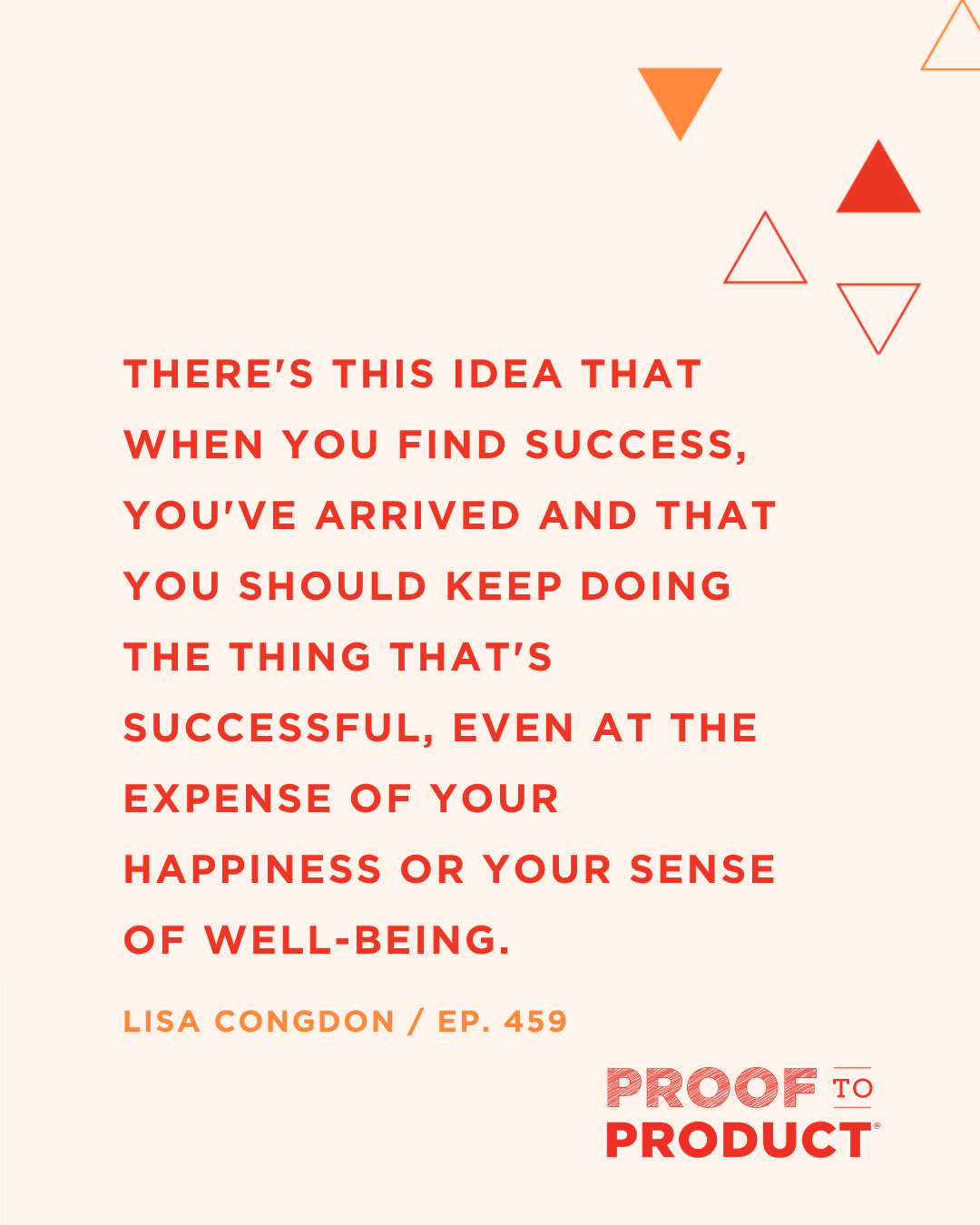
Yeah, so I have loved having a retail business for the last 2 decades, and there was a time when it was literally the favorite part of everything I do because I also do illustration commissions and make fine art and have gallery shows. So like, I had many things going on, and there was a time there when it was literally my favorite thing to do. And I just found myself in the last few years like feeling boxed in and stressing about stuff that was making me anxious and like questioning what I was doing. And I think in this world and like I'm a Gen Xer, so I have like this crazy work ethic and I always been very ambitious and, you know, like we're really the first generation to you know, be super career-driven as women. And I think there's this sort of idea that when you find success, you've arrived and that you should keep doing the thing that's successful, even at the expense of your happiness or your sense of well-being. And actually, what I think I'm learning from younger generations, from millennials and, you know, Gen Z, is that like prioritizing your mental health, and your happiness should actually come first.
Katie Hunt [00:18:51]:
Yes.
Lisa Congdon [00:18:51]:
Like, I think there's so much to learn from younger generations. And like, I follow a lot of younger folks on social media who talk about these very topics. And I started to really question like, okay, I've got 3 amazing employees, a business that sort of like runs itself. We're making money. I'm paying everyone good salaries with benefits. It's like, what's wrong with this situation?
Katie Hunt [00:19:17]:
What's wrong with this? Yes. It's what everyone works hard for. That's right.
Lisa Congdon [00:19:21]:
It's what I worked hard for.
Katie Hunt [00:19:22]:
Yes.
Lisa Congdon [00:19:23]:
Why would I give this up? You know, and I'm 58 years old. I've got over 5 years before I retire. And so I was like, I'll just keep going until I'm 65 and then I'll close my business. And my employees knew this. This was always the plan. Not that it would last forever, but we would keep going. And I woke up one day in December of last year and just had a sort of come to Jesus with myself about what I was really wanting in my life, which was more time to just make art without the pressure to sell it. And I have had the privilege of, you know, making good money over the years and I have savings and like I have a Safety net.
Katie Hunt [00:20:09]:
Yeah.
Lisa Congdon [00:20:09]:
For myself. And I'm married to somebody who's employed. And so I just thought, what if I did this thing for me, did the thing that was gonna make me happy, and I ended this thing with grace and spaciousness and like gratitude instead of waiting until I was burned out and then doing it with sort of like bitterness and anger potentially. I kind of caught myself before I was headed in that direction. And I thought about it a lot. I worked with a business coach for years, talked to her about it at length. And I just was like, let's do this. And I was terrified.
Lisa Congdon [00:20:49]:
Of course.
Katie Hunt [00:20:49]:
To be clear.
Lisa Congdon [00:20:49]:
Especially disappointing my team. They've worked for me for a long time. They were all very happy in their jobs. And we had this kind of like wonderful studio community and So I thought about it, gave it some time, and then in January of this year, I sat my employees down and told them that I had made this decision. And I was so scared to tell them.
Katie Hunt [00:21:13]:
I don't blame you.
Lisa Congdon [00:21:13]:
But they were so wonderful and like just disappointed, but also like, we're going to support you. I gave it a 6-month runway so that it would give them time to find new places to move on to and that we could slowly sell off our merchandise. It wasn't abrupt. I could have some really positive messaging around it, like telling my folks, my audience, like, hey, I'm not doing this because we're failing. I'm doing this because I'm making a conscious decision to take care of myself and to go back to, you know, being an artist in a more traditional way. And everyone has been so supportive. We pretty much sold out of everything except I have a handful of greeting cards left. But by the way, I still have an online shop.
Lisa Congdon [00:21:55]:
I'm only selling Very limited edition prints and original art now. And I've already gotten like 6 orders since I closed. So I'm packing and shipping a few things here and there, but not, you know, doing the full-scale fair wholesale of brick and mortar and online shop anymore.
Katie Hunt [00:22:12]:
Amazing. Okay. Did you feel relief and maybe a little empowered once you made the decision and shared it publicly? Like once you got through some of the terrified feelings that you were feeling? Yes.
Lisa Congdon [00:22:23]:
Yes. So that, that's a great question. So yeah, terrified. And then once I kind of put it out into the world and it was so well received, I did feel very empowered and also very relieved. And actually my stress level was so high back in December, I'd gotten shingles. Like I literally made myself sick because I was so stressed about running this business and also closing the business.
Katie Hunt [00:22:50]:
Yeah.
Lisa Congdon [00:22:51]:
And my stress levels are You know, down now. And I'm like, you know, it's a little lonely here in my studio. I don't have my full team here for the first time in many, many years, but I have so much more flexibility and freedom to come and go as I please and kind of like structure my days how I want. And it's been really wonderful so far. I mean, it's only been a few weeks of—
Katie Hunt [00:23:13]:
This new life.
Lisa Congdon [00:23:14]:
Yes. Yeah. 2, 3, Lisa Congdon 2.0 or 3.0 or whatever it is. But I'm excited to see where it takes me. And, you know, I really think that, like, I was telling somebody yesterday that this idea that if it ain't broke, don't fix it, or like, if you can, you should, or, you know, like, I really think that modeling for other people that you can have a successful business but also make very intentional choices about whether you still want that thing even though it's not broken. And that you get to decide what you want to do with your life and making choices that are intentional and made with love and care versus working yourself into a, like, into the ground where you're just exhausted.
Katie Hunt [00:24:03]:
Yeah.
Lisa Congdon [00:24:04]:
I think like there's a lot of power in that. And I'm finding from talking to people that a lot of people are like, oh, I want to, I need to do this too, or you've inspired me.
Katie Hunt [00:24:14]:
I think a lot of people forget that they have the autonomy and the power. I think a lot of the business owners I talk to, they've essentially worked themselves into a job, right? They built this business with the intent for freedom, flexibility, financial stability, and they have that, but they've, they're also just grinding so hard that they're exhausted or feel like it's this weight of like a 9-to-5 type job would be. And so their vision for what they set out to create is not what they're actually experiencing. And so for you and others to share their stories like this, I think it is is super important and valuable to all creative entrepreneurs. And I think too, you know, I want to recount that like you did this very intentionally. You were financially stable. You set yourself up in these different ways. You made smart decisions in, you know, the earlier years of your business that allowed you to make this choice.
Katie Hunt [00:25:02]:
But also, if some of our listeners are on listening right now and they're like, I need to cut back on something, like maybe you're not shutting down a whole arm of your business, but maybe you are cutting back on certain pieces of it, you know, like adapt this for your exact circumstances. And that's said to those listeners more than you.
Lisa Congdon [00:25:16]:
Yeah, exactly. And like I said, you know, there are many years where I was having a blast doing this, you know, and it was so— I think that you may have a blast doing your retail business forever, but for some people, whether it's retail or some other arm of your business, that you just find yourself feeling burned out or like not as invested in it anymore, or that it's it's like frankly stressing you out or it's keeping you awake at night for whatever reason because you're just not finding joy in it anymore, that it's okay to let that go. You don't have to do the thing just because you built the thing.
Katie Hunt [00:25:52]:
Yeah.
Lisa Congdon [00:25:52]:
And, you know, people were like, could you sell your business? And I'm like, sure, but my name's attached to it. That's not something I'm interested in. But for a lot of people, that's also an option. I've known people who, who have sold their businesses and made a profit and sort of let their baby go, you know, essentially. And there are lots of ways to do it. And it's okay to do it even if you're not 65 and ready to retire.
Katie Hunt [00:26:15]:
Totally. What would you say to somebody who wants to make some changes, wants to cut back on certain things, but they're terrified of what it will do to their income? And taking a step back from that, what are your thoughts on that?
Lisa Congdon [00:26:27]:
You know, I definitely was worried about that. I think one of the things that I did before I decided to do this was to make sure that I had a plan for what other ways I could make money. I do illustration, a lot of illustration work. And so that was like, you know, something that I'm going to continue to do. I do client work and I got a book deal earlier this year. So that was actually one of the things that helped me make the decision because I was like, oh, it was, you know, a big book deal. And I had the advances spread out over 4 payments, which will come to me in the next few years.
Katie Hunt [00:27:05]:
But you also need the time and the space to write that book.
Lisa Congdon [00:27:08]:
To write the book.
Katie Hunt [00:27:09]:
Exactly.
Lisa Congdon [00:27:10]:
So that really figured into my decision-making. And then, you know, I'm starting to work on developing this course. And so I was like, okay, that will go for sale in the beginning of the year. And then I sold off most of my merchandise.
Katie Hunt [00:27:25]:
So you had that income too.
Lisa Congdon [00:27:27]:
I have that income. And so I made a plan and I think having a plan is really important. And, you know, there are so many ways that we can monetize Our talents as artists in this day and age because of the internet, and figuring out what those things are. Because if there's one part of your business you're not happy with, it's okay to let it go because there are other things that you can do.
Katie Hunt [00:27:52]:
Yeah, I like exercise of I've done that a couple times myself where I've decided to close something down, and I just said, "Okay, well, here's what it made last year. How can I make that same amount of money or more from something else? Like what can I ramp up or?" create or whatever. And I agree with you, having the plan also provides a little bit of comfort too, of like, oh, I can do this. It doesn't feel like just a sporadic choice or decision that you're making too. Tell us more about the course that you're building. I would love to hear more.
Lisa Congdon [00:28:19]:
Well, it doesn't have a name yet. I'm working on it with Emily McDowell, and it's a course about— for folks who have product-based businesses and have maybe taken your courses and taken other courses that really set them up with good systems and processes and thinking about their, you know, how to like basically have a product-based business and how to make it work and run well. And it's for people who have everything sort of seemingly dialed in, but are still struggling with sales and having a successful product-based business. We know the key to having a successful product-based business isn't simply a matter of skill or talent. As I mentioned earlier, it's not really based on, you know, having the perfect marketing or sales or sales systems. All those things are extremely important. Like you can't run a product-based business without those things. It's not even a question of whether your products are good or bad.
Lisa Congdon [00:29:20]:
It's whether your products are effective. And product design is not just about creating something that's beautiful or cool or clever. It's about creating work that succeeds in a commercial ecosystem. So, you know, your work has to catch someone's eye. It has to communicate instantly, appeal to a specific customer, and really ultimately entice someone to buy it. And so the course is going to cover, you know, what does that mean? What does it look like to create a product line that is effective? And so it's something that I don't think there's a course out there that does that exactly. There's a lot of courses like the ones you offer that do lots of other aspects of owning a product-based business.
Katie Hunt [00:30:07]:
Our stuff is about sales, marketing, and the systems like you talked about. And I am so giddy with excitement that you're doing this program because we don't— I mean, we cover the basics of fundamentals of like how much product and MOQ and price and some of the tactical things, but the art direction and the cohesion and What you're talking about is so needed and so necessary because you're right, without that, the rest of it doesn't really matter. We want to get that product dialed in first.
Lisa Congdon [00:30:34]:
That's right. And so we're hoping it's going to be complementary to things that you offer and, you know, that others offer. And so we're excited. So we haven't named it yet. That's the problem.
Katie Hunt [00:30:45]:
It's the hardest to name things.
Lisa Congdon [00:30:46]:
I know. Lila Rogers already has a class that's, it's actually not for product-based businesses. It's for illustrators called Make Art That Sells.
Katie Hunt [00:30:53]:
that sells.
Lisa Congdon [00:30:54]:
And so we're like, okay, well, we can't call it that.
Katie Hunt [00:30:56]:
Right, right, right. At least you checked first before you like— Yeah.
Lisa Congdon [00:30:59]:
Lilla used to be my agent, so I know that class. But anyway, so we're still working on naming it, but we will be filming it. It will be 8 weeks long starting in February. People can go to— and we can put this in your show notes, but people can go to the Greater Goods Alliance, which is Emily's and my website for our former coaching program and get on a mailing list where they can learn more about it. And we'll be starting to tease out information about it this fall. So that's one of the big projects that I'm working on now, and I'm super excited about it.
Katie Hunt [00:31:33]:
Oh, I love to see how excited you are about it too. Like, it's really coming through.
Lisa Congdon [00:31:36]:
Yeah. Well, it's funny, I— writing books and designing courses is always like, it's interesting as a visual artist who loves to draw and design. Those 2 things use very different parts of my brain. Yeah. And I'm always like, whenever I start a new book project, especially if it's not an illustration project, if it's just writing, or whenever I, you know, design a new course, I'm always like, am I going to be bored? Like, is this going to be— is this going to light me up? Am I going to be excited to work on this? And the 2 projects that I'm working on right now, the book that I'm writing, and also, which is totally unrelated to this course by the way, and this course that I'm working on, are just like super fun and exciting, and I think people are going to really love it.
Katie Hunt [00:32:20]:
Awesome. Yeah, it's not easy to develop programs. I mean, I've done my fair share, and I feel like— I mean, Paper Camp, we're heading into round 48 this fall, and we constantly evolve and continue to improve what we're teaching. But to your point, it's exciting and it's fun because you know that the work you're doing is going to positively impact other people. You know that, like, the things you're teaching or telling them are meaningful, and it's just how do we keep it concise and direct and give them the info they need in the best way possible.
Lisa Congdon [00:32:49]:
Yeah.
Katie Hunt [00:32:50]:
So yeah, awesome. Lisa, this has been a total joy. Thank you for taking the time to chat with me today.
Lisa Congdon [00:32:55]:
Oh, thank you for having me. I'm so excited. I was really stoked when I got your email. So thanks.
Katie Hunt [00:33:00]:
Well, it was funny, and thank you for that kind word, but I saw your announcement about closing the business, and I had been wanting to invite you to the show for a long time, and I was like, okay, I said to my team member Brittany, I'm like, we to talk to Lisa. We have to find out what she's doing next.
Lisa Congdon [00:33:13]:
It's true. It's like, it's a weird thing to have somebody like me who's closing their business on a show about owning a retail business.
Katie Hunt [00:33:20]:
There's so many lessons here though.
Lisa Congdon [00:33:21]:
Yes, and I love that you see that, that, you know, there's not one way to do this, and hearing different perspectives is so important. Thank you for giving me a platform to do that.
Katie Hunt [00:33:32]:
I appreciate it. Of course, it's my pleasure. We'll make sure to include all your links in the show notes for people to connect with you there, but thank you again, Lisa, this was great.
Lisa Congdon [00:33:40]:
Yeah, thank you.
Katie Hunt [00:33:42]:
I really enjoyed this conversation with Lisa, and I hope you did too. I think one of my biggest takeaways is that just because something is working doesn't mean that you have to keep doing it forever. Lisa had built a successful business, she had a great team, and the business was making money, but she realized that the business she had was no longer giving her the life that she wanted. And so instead of waiting until she was completely burned out, she made a thoughtful, intentional decision about what she wanted next. I also really enjoyed about what she said of having a plan to replace income before making a major change. So whether you are thinking about closing a revenue stream of your business, dropping a product line, stepping away from something, or just changing how you're spending your time, you don't necessarily have to have an all-or-nothing decision. So you can look at what something is currently contributing to your business and ask, how else could I generate that revenue or create more value with something that actually fits And if you're listening to today's episode and thinking, okay, what should I be focusing on next in my business? I want you to go take our free 90-day roadmap quiz. It's just 8 questions and it'll help you identify exactly where you should focus your attention over the next 90 days in your business to continue growing your product brand.
Katie Hunt [00:34:56]:
You can take that quiz at www.prooftoproduct.com/quiz. Thank you so much for listening. If you found this episode helpful, please do share it with a friend. Thanks so much. And I will see you soon with another new episode. Bye!

Today's guest is Melissa Gullatte, the founder of Gracefully Made Art. Melissa started her business in 2015 while she was a student at Auburn, painting original artwork and then designing wedding stationery for eight years. She walks us through how licensing works and how she went from taking Paper Camp in 2023 to having her products in more than 1,000 stores just three years later.